

Surgery and implantology
Surgery and implantology
SURGERY AND IMPLANTOLOGY
Dental surgery encompasses surgical interventions to repair teeth, gums, and jawbones, including tooth extractions (including wisdom teeth), apical resections, cystectomies, implantology, and periodontal or bone reconstruction procedures. These procedures, usually performed under local anesthesia, aim to treat complex conditions and restore oral functionality. The tasks of dental surgery are not limited to the extraction of unrecoverable teeth, as many patients believe. Ongoing research in the field of dentistry, the development of new materials, and the application of modern, high-tech equipment allow the primary direction in the surgeon's work to be the preservation and reconstruction of damaged parts of the tooth.
There are conditions in which surgical treatment methods allow the extraction of only the portions of the tooth root affected by inflammatory processes in order to allow healthy tissues to function normally, for example, in the case of exacerbation of chronic periodontitis. Extraction is performed only when the root and tooth are practically completely damaged, when their restoration is no longer possible.
Basic procedures performed at our clinic:
- Extraction of temporary or permanent teeth
- Alveolar curettage
- Treatment of alveolitis
- Operculectomy
- Apical resection
- Amputation, root hemisection
- Cystectomy
- Implantation intervention
- Sinus lift surgery
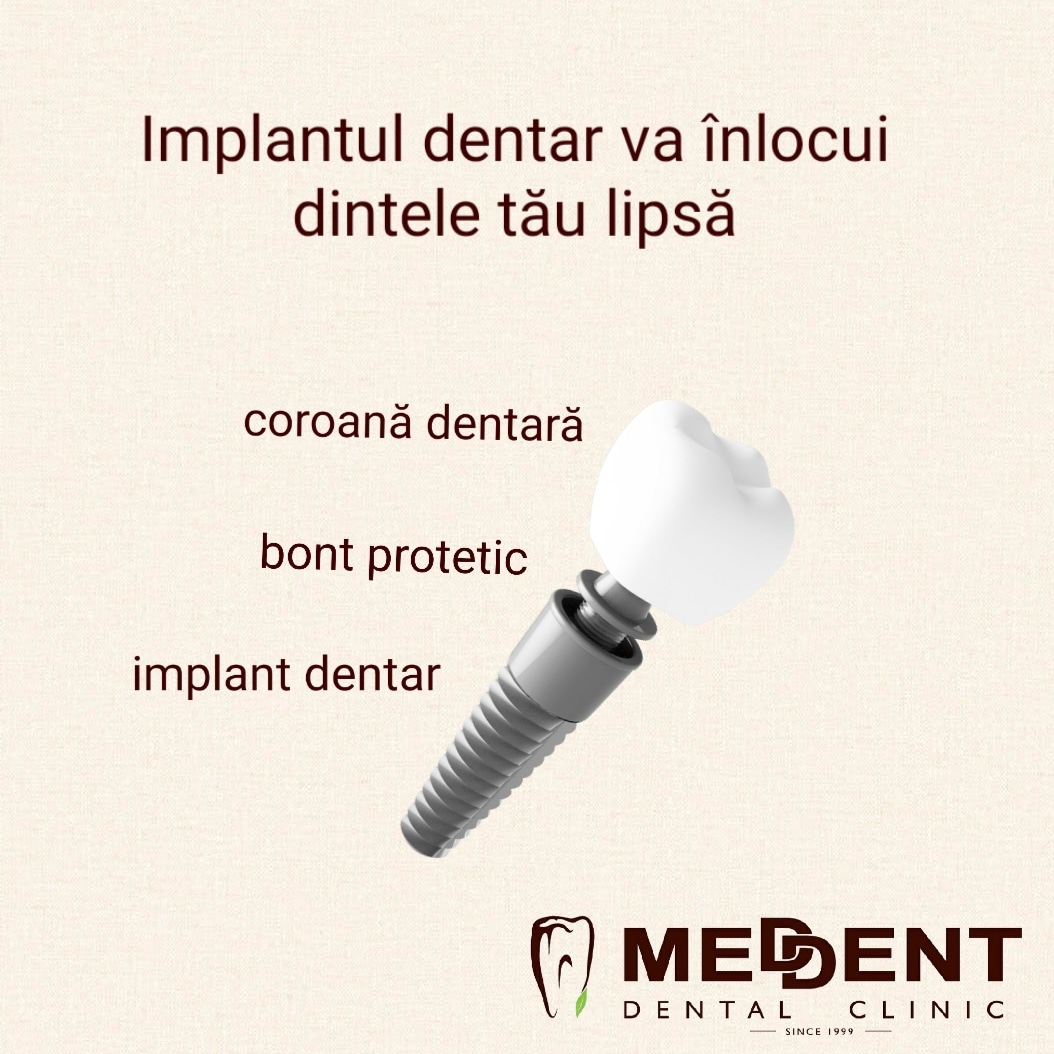
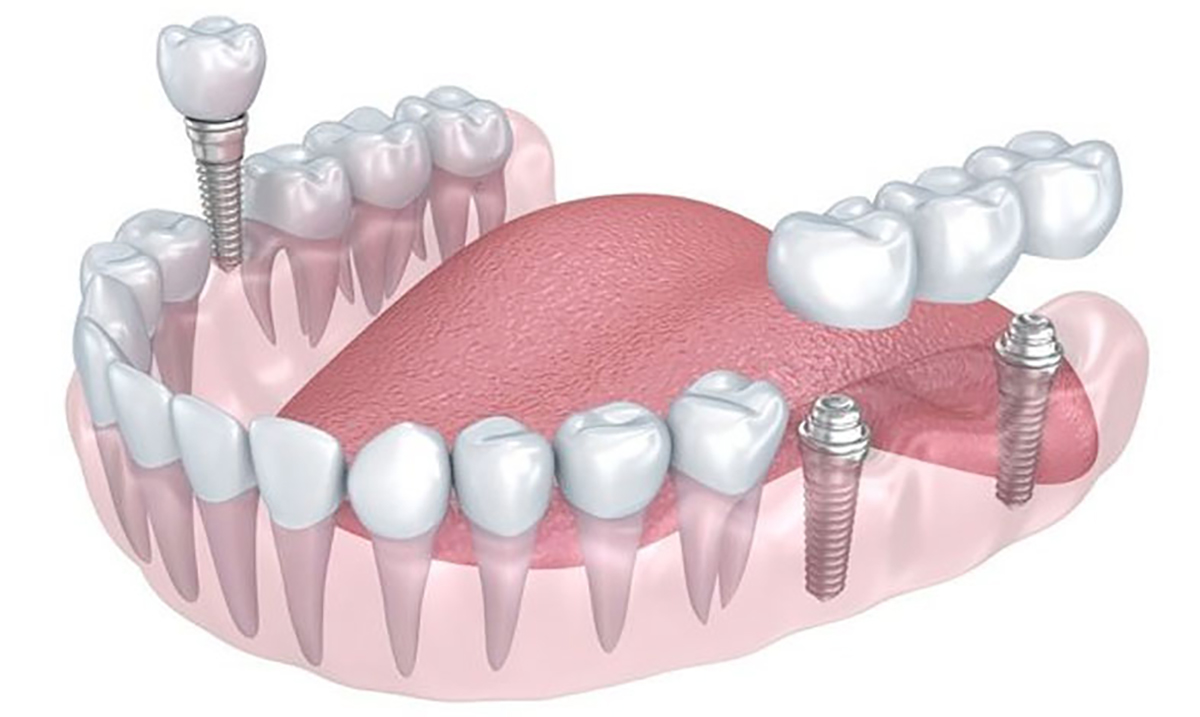
Dental implant
Sinus lift
Sinus lift, cases 1 and 2


1. Dental extractions
Tooth extraction is the dental procedure of removing a tooth from its alveolus, involving local anesthesia, mobilization and extraction of the tooth, followed by suturing and recommendations for postoperative care. Tooth extraction is resorted to in the following situations:
- teeth with extensive coronal-radicular destruction (caries), which can no longer be restored with fillings or prosthetic means;
- when a tooth is fractured longitudinally or far subgingivally and can no longer be treated;
- teeth with severe mobility due to periodontal disease;
- teeth with complicated gangrene, with apical periodontitis (periapical granulomas, cysts) in which conservative endodontic/surgical treatment (by root tip resection) is not indicated or has failed;
- the decay has destroyed or damaged the root of the tooth;
- much of the tooth and jawbone has been destroyed by infection;
- extractions for orthodontic purposes, when aligning the teeth is not possible due to their crowding in the arch;
- teeth in vicious positions (ectopic, impacted) that affect other teeth.
Post-operative recommendations
- avoiding touching the tooth extraction site, as any intervention could cause an infection;
- avoiding physical exertion and strong mouth rinsing in the first 24 hours;
- maintaining proper dental hygiene;
- following the dentist's recommendations!
2. Dental implants
The dental implant is a piece of pure titanium, generally shaped like a screw. It is intended to create an artificial root in the jawbone, where the natural tooth or teeth are missing. The reconstruction consists of two segments — one intra-osseous (the implant) and one supra-osseous, called the prosthetic abutment. A crown, bridge or denture is anchored above the prosthetic abutment. The treatment is conservative compared to a traditional bridge work, because dental implants eliminate the need to sacrifice neighboring teeth. If we make a dental bridge, it needs at least 2 abutment teeth for anchoring, teeth that would need to be prepared (the nerves are extracted, the canals are filled and the teeth that were once healthy are grinded).
Why do we recommend dental implants to our patients?
- To keep neighboring teeth intact during prosthetics. That is, we avoid grinding neighboring teeth, keeping them healthy for as long as possible.
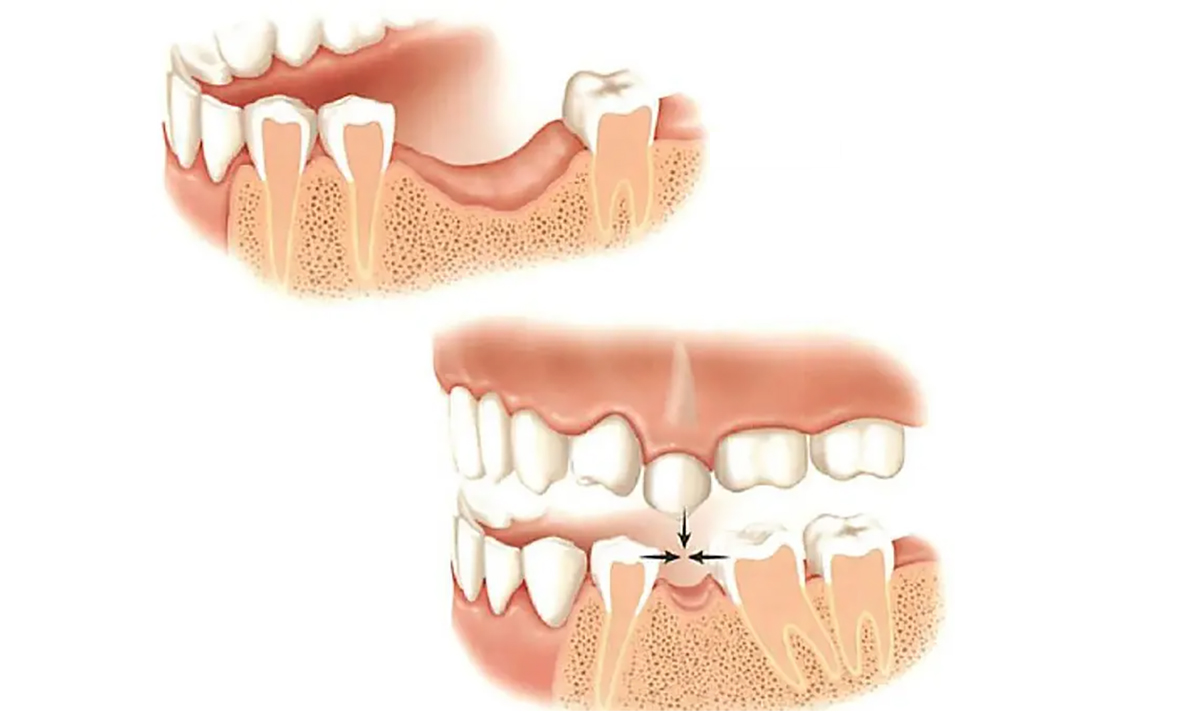
- To avoid bone resorption. The implant replaces the tooth root, which trains the bone to maintain its existing volume. The only stimulus for the bone is the tooth root. In its absence, the bone shrinks (atrophies).
- In this way, we avoid subsequent bone augmentation surgeries, which are sometimes not possible to perform in more difficult clinical cases.
- The material (titanium) from which it is made has maximum biocompatibility with the body.
- It provides high stability and resistance to anchored prosthetic works.
- Eliminates the inconvenience of wearing removable dentures.
- It looks and feels like a natural tooth and gives harmony to the whole appearance.
The implantation procedure consists of several stages:
- Consultation and 3D diagnosis for bone volume assessment;
- Surgical stage – implant insertion;
- Osseointegration period – 6 months;
- Prosthetic stage – fixing the permanent crown or bridge on the implants.
To ensure a longer lifespan for dental implants, you must follow 2 simple but extremely important rules:
- good hygiene;
- periodic check-ups twice a year with the dentist.
Schedule an implant consultation
Call +373 79 210 407 and start a new stage of life with MEDDENT!
3. Bone augmentation
Bone augmentation (bone addition) is a dental procedure that restores resorbed maxillary/mandibular bone volume, necessary for the stable fixation of dental implants. It uses autogenous (from the patient), synthetic or bone materials, serving as a solid base for bone reconstruction, often accompanied by a protective membrane.
It is necessary when the bone is too thin, short or damaged to support a dental implant, commonly after tooth extractions, periodontal disease, bone atrophy after tooth loss, or when the maxillary sinuses may be located too close to it which prevents the insertion of the dental implant.
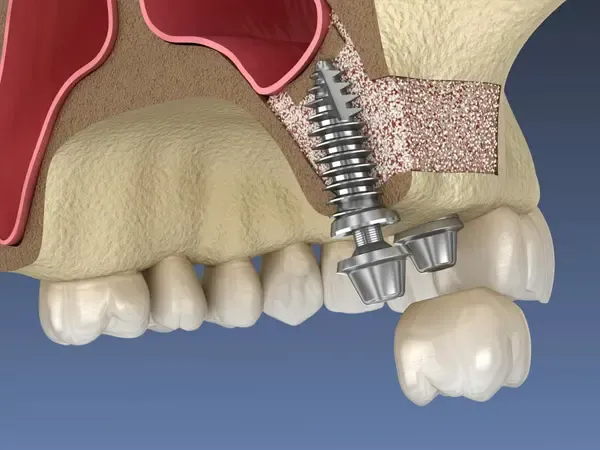
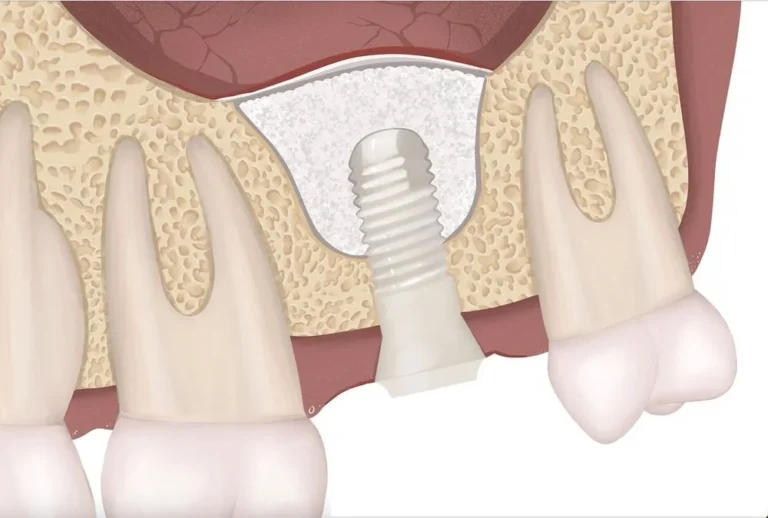
The most common bone augmentation procedure in dentistry is the sinus lift - a surgical bone augmentation procedure performed on the upper jaw to increase the bone volume required for the insertion of dental implants. By lifting the sinus membrane and inserting a graft material, a solid base is created, which is necessary when the sinuses are too low or the bone is too thin. The purpose of this procedure is to create a stable support for dental implants in the upper lateral area (molars/premolars). The bone addition procedure is performed under local anesthesia. Healing usually takes between 4 and 6 months.
Implantation and sinus lift allow restoring an aesthetic smile even in extremely difficult cases, that is, in situations when the patient addresses late. Before the advent of this technique, some patients had to be content with only removable prostheses and bridges. Once the possibility of bone growth emerged, contraindications for implant placement were considerably reduced.
What not to do after sinus lift surgery?
The recovery process depends greatly on following the instructions received from the dentist-surgeon.
- Do not blow your nose
Blowing your nose for at least one month after surgery is contraindicated.
This habit can lead to rupture of the sutures and bleeding. If you have nasal secretions, use an instrument to aspirate them.
- Do not sneeze
Sneezing with your mouth open or while holding your nose can affect the healing process.
During sneezing, the pressure increases and may increase the risk of bleeding.
- Avoid flying or diving
Airplane flying or diving should be avoided, due to the variation in pressure in the nasal cavity. If you cannot postpone the flight, apply pressure rebalancing maneuvers often, such as yawning or swallowing.
- Avoid bending
Bending and lifting heavy objects increase pressure in the oral or nasal cavity.
Ask a family member or friend to help you, to avoid complications.
- Do not blow
The effort of blowing can increase nasal pressure and lead to complications. Such actions include inflating balloons or playing wind musical instruments.
- Do not rinse your mouth on the first day
Rinsing the oral cavity vigorously can promote the loosening of the sutures and bleeding. Therefore, it is recommended not to rinse the oral cavity in the first 24 hours. Afterwards, gently rinse the oral cavity using the recommended solutions. Rinsing the oral cavity is indicated after meals, continue this habit for at least a week.
- Do not lift your lip or pull your cheek
Even if you are curious and want to see what the suture looks like, do not try this. Lifting your upper lip or pulling your cheek can lead to suture breakage, bleeding, and other complications.
- Do not exert yourself
Rest is the key to a quick and complete recovery. Avoid strenuous exercise during the first week. You are also encouraged to rest with your head elevated until you are about to go to sleep. At night, use a soft pillow to keep your head slightly elevated. To prevent dizziness, get out of bed slowly.
- Avoid alcohol
Avoid drinking alcoholic beverages. Alcohol delays the healing of the incision and affects the healing process.
- Avoid smoking
Smoking is contraindicated after sinus lift surgery. Nicotine and related chemicals reduce blood flow and delay the healing process. In addition, smoking increases inflammation, postoperative discomfort, and can lead to a failed sinus lift. It is also important to mention that smoke inhalation causes an increase in the pressure of the oral cavity. Thus, bleeding and other serious complications may occur.
What should you do after sinus lift surgery?
- Apply cold compresses
After such an intervention, the inflammatory reaction is normal. Thus, you can expect the appearance of postoperative edema (swelling of the cheek). To reduce edema, it is advisable to apply cold or ice compresses. Keep the compresses for about 15 minutes, with 15-minute breaks after each application. Do not exceed the time of applying the compresses for more than 4-6 hours. It is important to know that the peak of edema is reached after 2-3 days. However, after this period, it begins to subside.
- Drink plenty of fluids
After surgery, it is recommended to consume liquids at room temperature that day. Drink in small sips. It is preferable not to use a straw, because during the aspiration of the fluid, the blood clot formed can come off, leading to bleeding.
- Eat soft foods in the first few days
A good recovery is also influenced by the food consumed after the operation. Soft foods are indicated, such as purees, soups, cooked vegetables or soft fruits.
- Take the prescribed medications
The doctor prescribes anti-inflammatory and analgesic medications to relieve the discomfort characteristic of the operation. It is advisable to administer them shortly after the intervention, before the effect of the anesthesia wears off.
- Perform rigorous dental hygiene
Brushing your teeth begins the second day after the intervention. To avoid dislodging the sutures, choose to opt for a toothbrush with soft bristles and make gentle movements while brushing your teeth. Proper hygiene contributes to a quick and complication-free healing.
Advantages of sinus lift surgery:
- restoring bone volume
- bone stability and stably fixed implant
- possibility of implantation
- avoiding dentures
If you've been told you don't have enough bone volume,
and you still want an enviable smile
schedule a consultation at +373 79 210 407
MEDDENT Dental Clinic
Your solution is with us!
Why choose us?
Choosing a dental clinic is an important decision. At MEDDENT, we combine solid medical experience with modern technology and a patient-centered approach to ensure every visit is safe, comfortable, and efficient.
Experience & professionalism
Highly experienced dentists dedicated to excellence and long-term oral health.
Personalized treatments
Solutions tailored to your needs, clearly explained and delivered with care.
Modern technology
Advanced equipment for precise, safe, and efficient treatments.
Friendly atmosphere
A comfortable environment for children, adults, and the whole family.
Frequently Asked Questions
Is dental treatment painful?
How often should I come for a dental check-up?
What should I do if I have a toothache?
Is dental anesthesia safe?
How long does a dental treatment take?
Book an Appointment

+373 22 210 407


Book an Appointment
+373 22 210 407
